ECUBE Kids
Secret Exploration Notes for Future Scientists, 2023–2024
Role: Project Director (secured and led the contract)
Client: Samsung C&T, Everland
Place: Everland

The World’s Biggest School, ECUBE School ECUBE Kids is an ecological learning program for elementary school children that explores how Everland can extend its role as an amusement park into a living learning environment. Its animals and plants offer opportunities for close observation and inquiry, turning a visit into a chance to investigate the living world.
We retained Everland’s encounters with animals and plants and developed a learning sequence that connected each visit to a research story, a record of discovery, and a making activity. A shared mission—documenting today’s living world for scientists 200 years in the future—gave children a reason to observe closely and build on their discoveries across visits. I coordinated the development of the curriculum, research portfolios, hands-on kits, and instructor resources to connect this learning experience with its delivery in the field.
Program Planning
The renewal connected monthly animal and plant topics through three complementary activities: storytelling, observation and recording, and making. Each activity built on the encounters available at Everland and contributed to a growing personal research portfolio.


The animal and plant strands follow different monthly subjects while sharing the same learning approach. Animal topics include desert animals, penguins, herbivores, parrots, and endangered species. Plant topics include roses, aquatic plants, carnivorous plants, conifers, and seeds. Each topic connects the available on-site encounters with research-note activities and an appropriate making experience.
1. Storytelling: A Mission for Young Researchers


The story connects Everland’s Lenny and Lara with researchers at the Lost Valley laboratory 200 years in the future. Children take on the role of ECUBE researchers, observing living things and recording information to share with the future team. To support immersion in this story, each child receives a researcher’s hat, a bag, and a research portfolio binder. These items help children step into their role and carry their mission into each visit. The narrative gives a purpose to the monthly activities and connects individual animal and plant topics across the program.
2. Observation


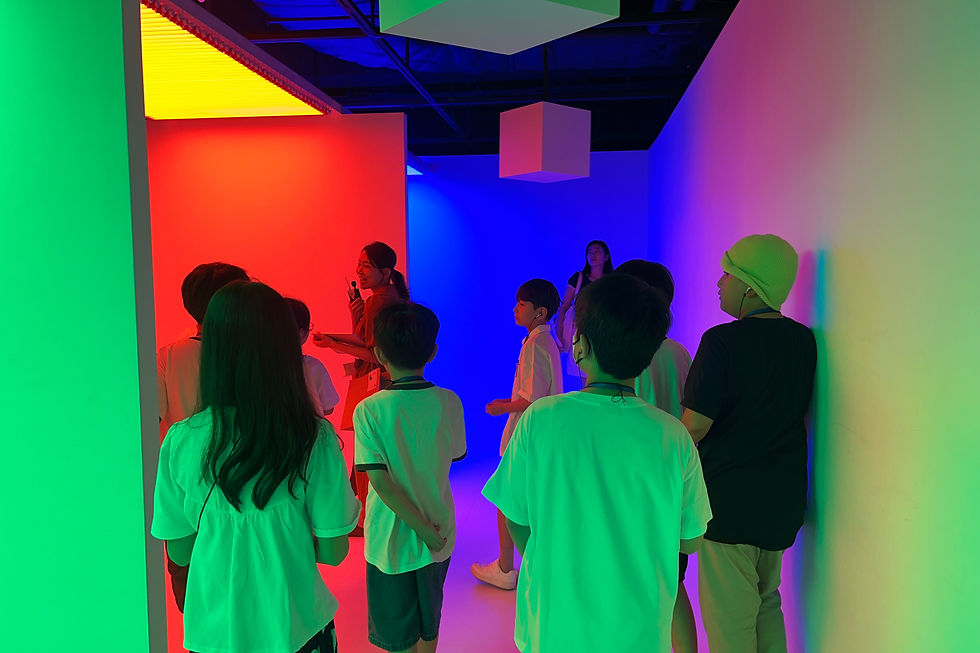
Everland becomes a living classroom where children observe animals and plants up close with zookeepers and specialists. Through guided observation, questions, and conversations, children learn directly from experts about the characteristics of living things and their relationships with their surroundings. These firsthand encounters form the starting point for the research notes and making activities that follow.
3. Science Portfolios

Children observe animals and plants up close at Everland, then record what they have noticed and learned as research notes in their own science portfolios. We designed the recording activities around the ways elementary school children can express their observations, using stickers, drawings, and mind maps to describe features, organize information, and explain discoveries in their own words. The portfolio brings these records together across visits, allowing children to revisit earlier observations and build a personal account of their exploration. Selected pages also include QR links to reference videos, allowing the inquiry to continue at home.
4. Learning through Hands-on Making

Venus flytrap
I developed making activities that connect directly to the subject of each session. The completed materials connect field observation with a tangible record of learning. Children can recreate a penguin’s movement, assemble a flower model, or build an elephant with a sock trunk. These objects give them a way to revisit what they have observed through movement, touch, and construction. The activities also extend the portfolio: a completed model or collected specimen becomes part of the child’s record of exploration. Together, the portfolio and making kits support an ongoing practice of noticing, recording, and exploring the living world.
Workshop &Teacher Training
The development team supported instructors through monthly workshops, with demonstrations of the learning materials and making activities.
We prepared teacher guides and classroom slides for the renewed monthly content, then worked through the materials with Everland’s instructors in online and in-person sessions. The workshops covered the intentions behind the activities and the steps needed to deliver them. The team also visited the first month of classes to observe how the renewed program worked in the learning environment. Following the training, Everland’s instructors delivered the renewed program on site.
Educational Material Development
We developed a coordinated set of research notes, activity sheets, teacher guides, and classroom presentations to support the program.

Science portfolio
Teacher guides
Classroom presentation
The science portfolio connects observation with a record of discovery. Teacher guides describe the learning goals, materials, lesson sequence, and facilitation notes. Classroom presentations introduce each topic and guide the making process, with blue accents for animal topics and orange for plants.
Educational Kit Development
Making activities turn the subjects children meet at Everland into objects they can build, handle, and investigate. I developed physical samples and making components to translate observations of living things into activities children could construct and explore.

We developed hands-on learning kits that help children translate their observations of animals and plants into models they can build and explore. Die-cut parts, fold lines, and clear instructions support independent making, while teacher guides help instructors prepare and lead each activity.