Light Explorers
A Journey into the Science of Light, 2024
Exhibition-linked STEAM Program: A Journey into the Science of Light
Role: Executive Program Director 기획 및 운영 총괄 책임자
Client: Dosen, Seoul Arts Center 도슨, 예술의 전당
Place: Seoul Arts Center 예술의 전당
Exhibition-linked STEAM Program: A Journey into the Science of Light
Starting from the innovative works of Carlos Cruz-Diez, this exhibition-linked learning program invites participants to explore and experiment with moments where light and color move between science and art. The program is centered on observation and inquiry, allowing participants to directly experience the properties of light and principles of color perception. Using tools such as RGB color tools, mirrors, flashlights, and eye structure models, participants follow a storytelling narrative about finding the stolen light while completing missions in the Dark Room, Mirror Room, and Color Room. Through this process, learners understand light and color through hands-on experience and engage in a creative STEAM learning experience that connects science and art.
Program Planning
Starting from the innovative works of Carlos Cruz-Diez, this exhibition-linked education program invites learners to explore the properties and perception of light through hands-on experimentation at the intersection of science and art.


1. Who is Carlos Cruz Diez?
Carlos Cruz-Diez (1923–2019) was a Venezuelan artist who studied how light and color work together. He did not see color as something fixed, but as something that changes with light, movement, and where the viewer stands. Through his work, he helped people experience color as something alive and always changing, and he became an important figure in kinetic and participatory art.
2. Exploring the Works of Carlos Cruz-Diez
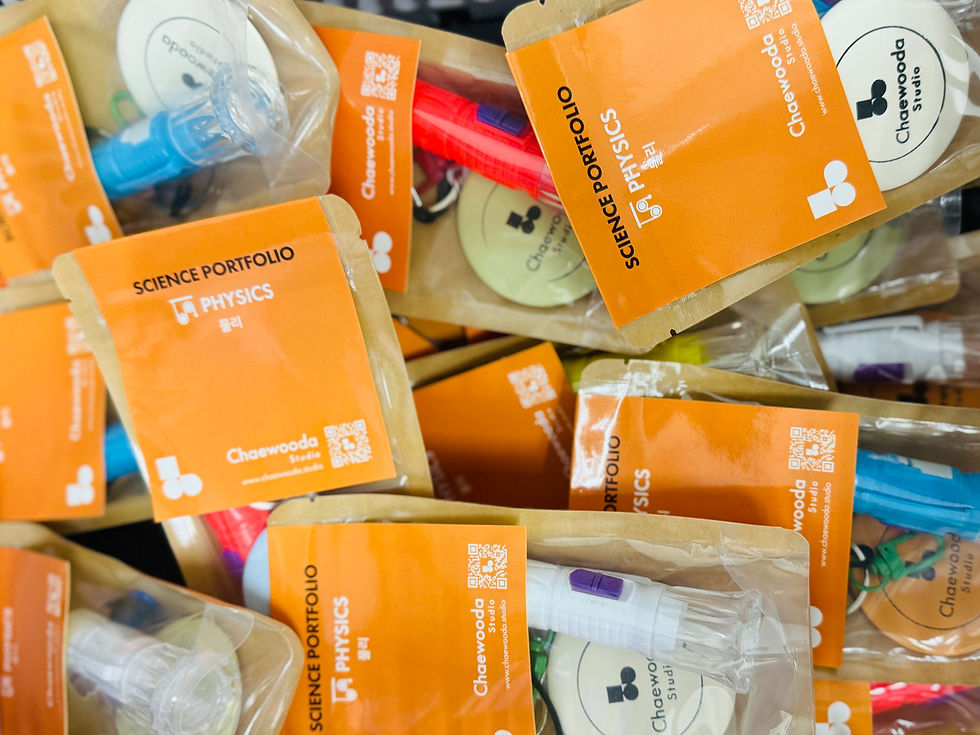
To explore the relationship between light and color in the works of Carlos Cruz-Diez, we developed an observation and exploration necklace that encourages children to view his artworks from multiple perspectives. The necklace includes RGB color paddles, a mini mirror, a mini flashlight, and a white three-dimensional model.
3. Understanding Vision: The Eye and Light


We created an eye structure model with an attached lens and used it to explain the role of cone cells in the retina, which are responsible for distinguishing color. Learners also observed changes in the pupil using a mirror and explored the eye’s structure through a 3D model, allowing them to develop a three-dimensional understanding of the eye and how light is perceived.
4. Immersive Storytelling Design


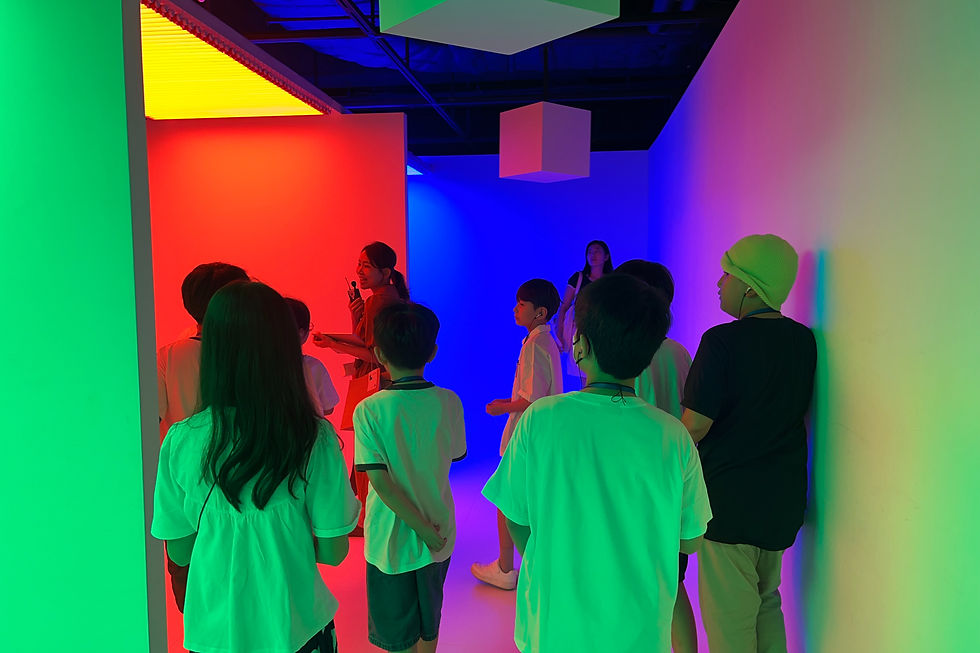
A storytelling-based immersive environment was designed to help learners fully engage with the narrative. In this setting, learners must complete themed surprise missions and a final mission to find the culprit who stole the light. As they progress through the sequence—Light Travels in Straight Lines (The Dark Room), Reflection of Light (The Mirror Room), and Mixing of Light (The Color Room)—learners carry out hands-on experiments that deepen their understanding of how light and color are perceived.
5. Light Exploration Workshop
Before the workshop began, a safety briefing was conducted, and participants were instructed to use flashlights only under the supervision of instructors and mentors. Based on the three primary colors of light, participants were divided into the Red, Green, and Blue teams. Various targets were placed on the walls, allowing participants to move freely throughout the space while conducting a range of light experiments.
Pilot Test & Program
We analyzed the science and art curricula and conducted a pilot test of various light experiments focused on the properties and perception of light.
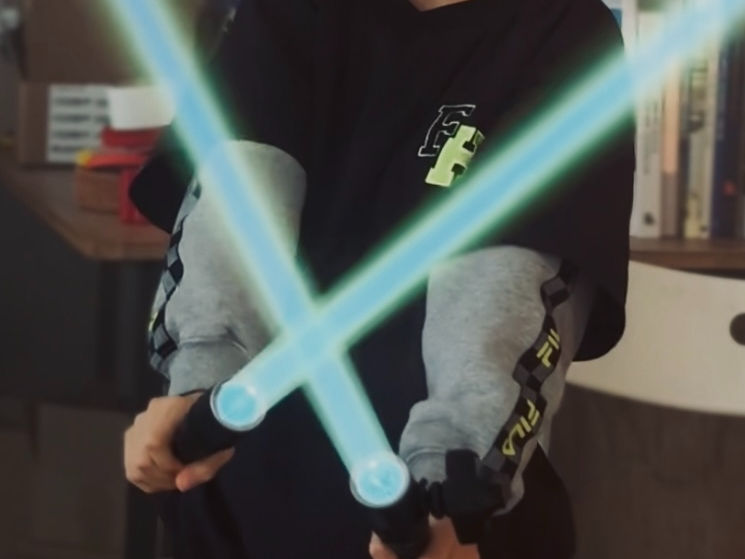
Workshop
I participated in every workshop during the program launch, identifying areas for improvement, making revisions, and refining the program.
Educational Material Development
I developed comprehensive educational materials,
including student learning kits, teacher guides, lesson plans, and project overviews.


Exhibition Experience Content Development
We prepared a variety of safe and engaging experiment tools, including an eye model, mirrors, lenses, RGB materials, flashlights, and a fog machine. A small take-home kit was also provided so learners could continue the activities at home.